Why Do Forehead Lines Appear Early in Redmond, Oregon?

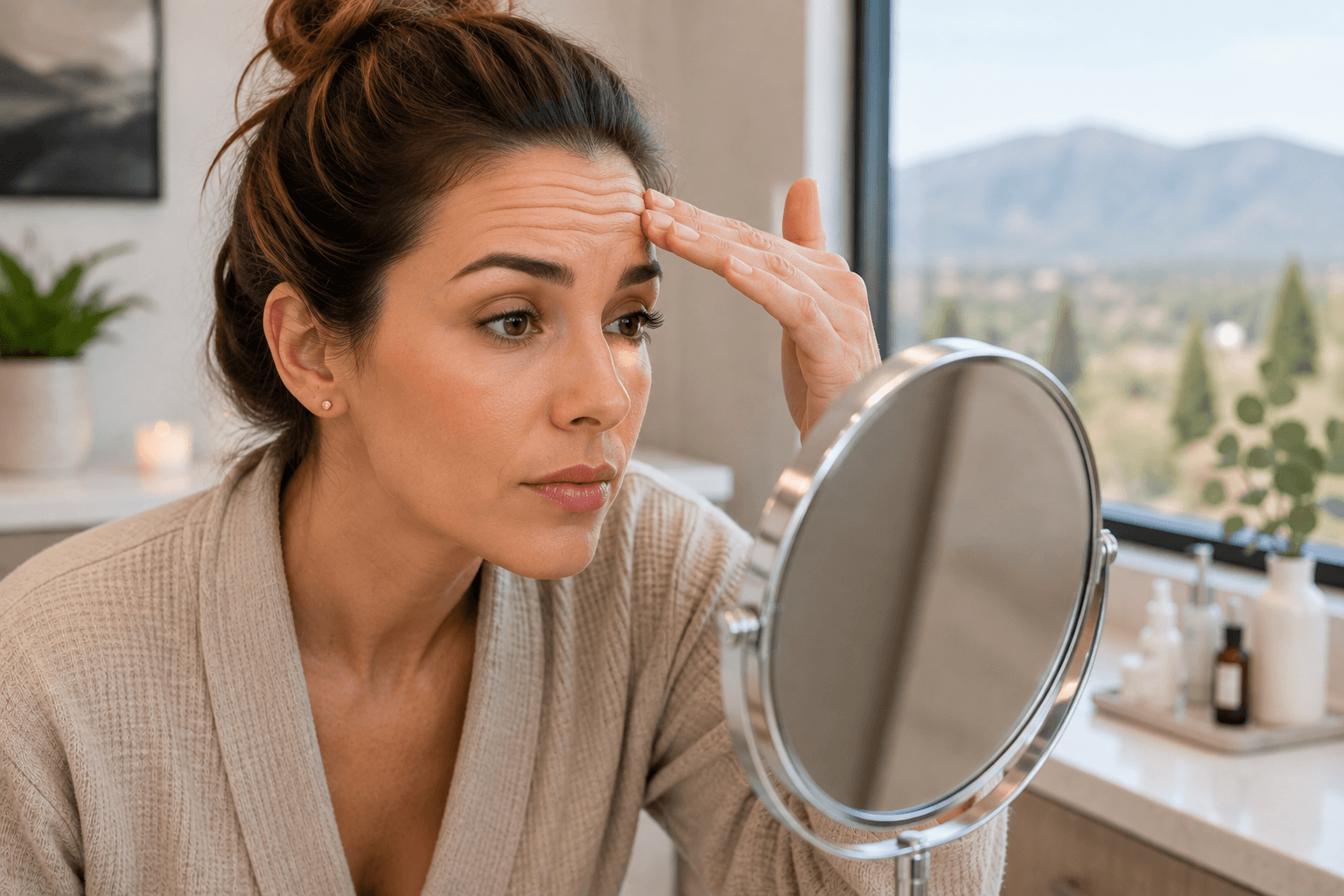
Some people notice forehead lines in their late twenties. Others barely see one by their forties. If you have ever compared notes with a friend and wondered why your forehead seems to be aging faster, you are asking a fair question, and it is one that comes up often during consultations at Renew You in Redmond, Oregon.
The honest answer is that forehead lines are influenced by a mix of genetics, muscle activity, sun exposure, and skin structure, and no two faces age in exactly the same pattern. Understanding why those lines form in the first place makes it much easier to decide what to actually do about them, including whether a forehead Botox treatment makes sense for you.
What Causes Forehead Lines to Form?
Forehead lines are considered dynamic wrinkles, meaning they form from repeated muscle movement rather than from skin damage alone. Every time you raise your eyebrows, squint, or show surprise, the frontalis muscle contracts and creases the skin above it. Over time, that repeated folding creates a line that eventually stays visible even when your face is at rest.
Why Do Some People Get Them Earlier Than Others?
Genetics play a large role in how thick or resilient someone's skin is, along with how expressive their facial muscles naturally are. People with more animated expressions, thinner skin, or a family history of early wrinkling tend to notice forehead lines sooner. Screen time is another modern factor. Squinting at phones and computers for hours a day adds up to thousands of extra muscle contractions each year.
Does Sun Exposure Make a Difference?
Yes, and this is especially relevant in Central Oregon. Redmond sits at a high elevation with strong, direct sunlight for much of the year, which accelerates the breakdown of collagen and elastin. That breakdown makes skin thinner and less able to bounce back from repeated movement, so lines settle in and become permanent more quickly than they would in a lower elevation or less sunny climate.
Can Stress or Sleep Affect Forehead Lines?
Chronic stress often shows up physically as a raised or furrowed brow, even when someone is not consciously frowning. Poor sleep can also affect skin's ability to repair itself overnight, which over months and years contributes to lines settling in earlier than expected.
When Do Forehead Lines Become a Cosmetic Concern?
There is no universal age or timeline. Some people are completely comfortable with expression lines and only become concerned when the lines are visible even with a relaxed face. Others want to address them the moment they notice a line appearing in photos. Either approach is valid, and there is no medical requirement to treat forehead lines unless they bother you.
How Does Botox Address Forehead Lines?
Forehead Botox works by temporarily relaxing the frontalis muscle so it contracts less forcefully. With less repeated folding, the skin above smooths out and existing lines soften. Results typically begin appearing within three to seven days and can last three to four months, depending on the individual and the dose used.
This treatment falls under neurotoxin services at Renew You, which also cover related areas like the brows and crow's feet for a more balanced, natural result rather than treating the forehead in isolation.
Is Botox the Only Option for Forehead Lines?
No. Depending on your skin and goals, some patients pair neurotoxin treatment with skin resurfacing options like Tixel or CoolPeel to address both the dynamic lines and the surface texture changes caused by sun exposure. A provider can help determine whether one treatment or a combination fits your situation best.
What Is the Difference Between Botox and Dysport for the Forehead?
Both are neurotoxins that work in a similar way, relaxing targeted muscles to reduce line formation. The main differences come down to onset time and diffusion, meaning how the product spreads once injected. Neither is universally better, and a provider can recommend which one suits your facial anatomy and desired outcome during your visit.
Who Is a Good Candidate for Forehead Botox?
Good candidates are generally adults who are bothered by visible forehead lines, are in good general health, and have realistic expectations about maintenance, since results are temporary and require repeat treatments to sustain. It is not recommended during pregnancy or breastfeeding, and a consultation is the best way to confirm candidacy based on your health history.
What Happens During a Forehead Botox Appointment?
Appointments are quick, often thirty minutes or less. A provider will assess your forehead muscle movement, mark specific injection points, and administer the treatment with a fine needle. There is little to no downtime, though mild redness or small bumps at injection sites usually resolve within a few hours.
What Should You Expect Afterward?
Most people return to normal activities immediately. It is generally recommended to avoid lying down or rubbing the treated area for a few hours afterward, and to avoid intense exercise for the rest of the day. Full results typically settle in within one to two weeks.
Preventing Early Forehead Lines Before They Set In
While treatment can soften existing lines, prevention plays a role too. Daily sunscreen use is one of the most effective tools against premature wrinkling in Central Oregon's sunny climate. Reducing repetitive squinting, staying hydrated, and maintaining a consistent skincare routine also help preserve skin's elasticity over time. Some patients choose to start Botox proactively before deep lines form, since treating a muscle before a line becomes permanently etched can help prevent it from settling in as deeply.
Renew You updated this guide this month in 2026 to reflect current treatment approaches and candidacy guidelines for forehead Botox in Redmond, Oregon and the surrounding Bend area.
FAQs About Forehead Botox Treatment
At what age should I start considering forehead Botox? There is no set age. Some people start in their late twenties as a preventive step, while others wait until lines are visible at rest. It depends entirely on your goals.
Will forehead Botox make my face look frozen? Not when administered by an experienced provider. The goal is to soften lines while preserving natural movement and expression.
How long does a forehead Botox treatment last? Results generally last three to four months before muscle activity gradually returns and touch up treatment is recommended.
Can I combine forehead Botox with other treatments? Yes, many patients pair it with skin resurfacing or dermal filler for a more complete rejuvenation plan tailored to their goals.
Does forehead Botox hurt? Most patients describe it as a quick pinch. Any discomfort is brief, and the appointment itself takes very little time.
The Forehead Has Feelings Too, Here Is How to Listen to Them
Forehead lines are not a flaw, they are simply a record of how expressive and sun exposed life in Central Oregon tends to be. Whether you are curious about prevention or ready to soften lines that already bother you, understanding the why behind them makes the next step a lot clearer.
Schedule a consultation with Renew You in Redmond, Oregon to talk through your specific concerns, or explore the full range of services available for both Redmond and Bend area patients.
Look Radiant & Feel Confident.
Discover the power of personalized care through our advanced, non-invasive treatments and signature wellness experiences. We're ready to help you reclaim your glow at any age!